The AI Tools Solopreneurs Are Using to Scale Without a Team in 2026
Something significant is happening.
Solo-founded startups surged from 23.7% in 2019 to 36.3% by mid-2025, and by 2026, solopreneurs represent over 41.8 million individuals in the US alone, contributing more than $1.3 trillion to the economy.
These aren't hobbyists running side projects. They're serious founders building real businesses, with no team, minimal overhead, and AI doing the work that used to require entire departments.
A complete solopreneur stack now operates between $3,000 and $12,000 annually, a 95–98% reduction in operating costs compared to traditional staffing models.
The question isn't whether to use AI tools. It's which ones are actually worth your time and money.
What Changed in 2026
Three things converged to make solo founder AI stacks genuinely viable.
AI went from impressive to reliable. Tools that used to produce inconsistent output now deliver results you can stake your business on. The trust gap has closed.
The cost collapsed. A virtual assistant costs $15–$25 hourly. At 10 hours weekly, that's $600–$1,000 monthly. AI tools delivering similar output cost about 2% of that. The ROI isn't close.
The operating model normalized. Remote-first infrastructure erased geographic limits. Async tools eliminated the need for real-time collaboration. A solo founder with the right stack can now compete with teams three times their size.
The Core AI Stack (What Actually Gets Used)
There's a lot of noise about AI tools right now. Most of it is marketing. Here's what solo founders are actually running their businesses on.
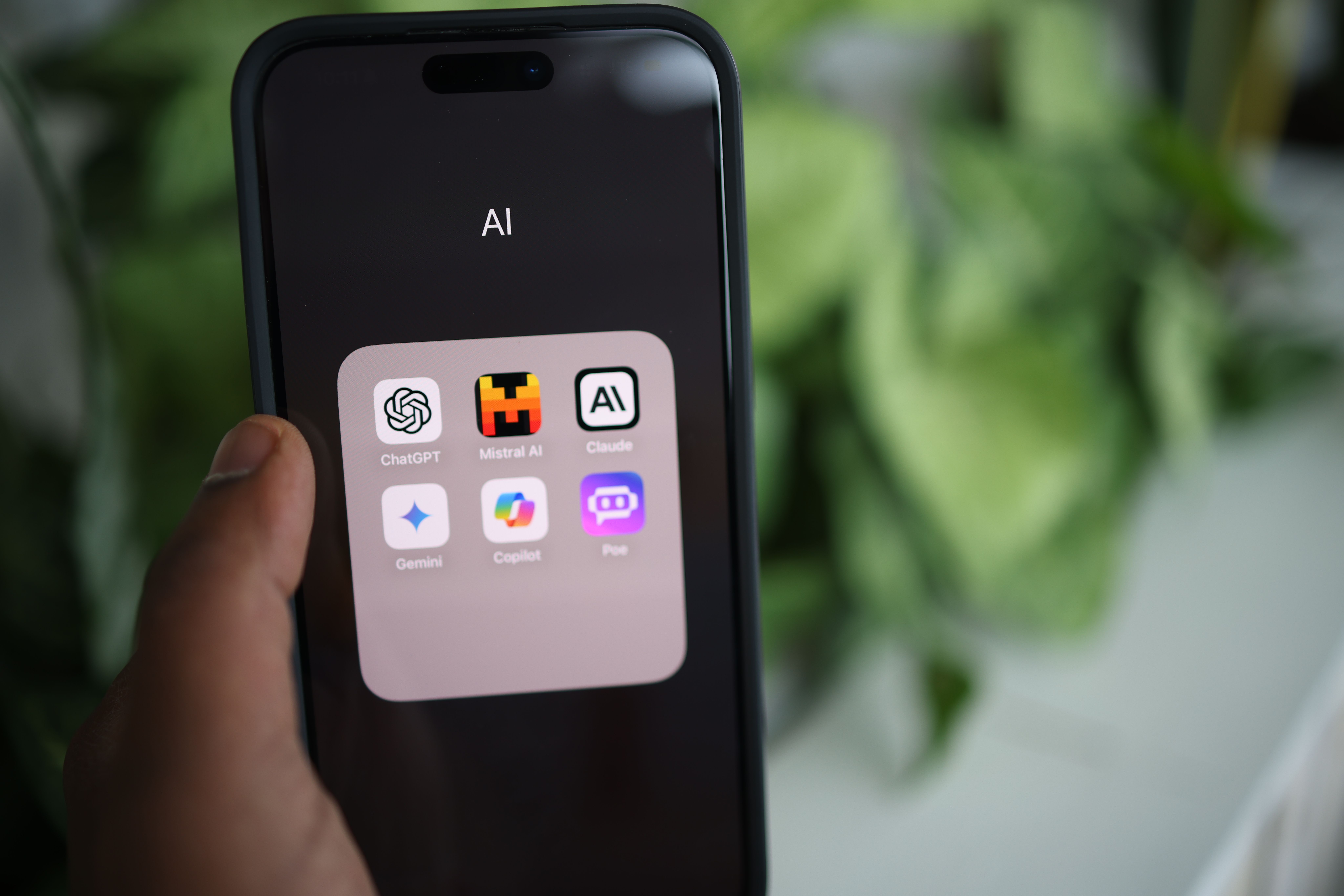
For thinking and strategy: Claude or ChatGPT
Both are capable. Start with Claude Free for document analysis and strategic planning. Add ChatGPT Plus when you need faster responses and plugin access. Unpopular opinion: you don't need both subscriptions initially, pick one and master it completely.
The founders who get the most out of these tools aren't using them to generate generic content. They're using them to think through positioning, draft proposals, analyze client feedback, and build systems. That's where the real ROI lives.
For content creation and automation: a layered system
The most effective solo content stacks work in layers. AI drafts, you direct. The output reflects your thinking, not generic AI voice, because you've built detailed prompts and brand guidelines into every workflow.
Content that could have taken 4–6 hours now takes under an hour. That compounding time saving is what lets one person run what used to require a content team.
For operations and workflow: Make or Zapier
Automation is where the biggest time savings happen for most founders. Email sequencing, lead capture, CRM updates, content repurposing, invoice delivery, these are all automatable. Niche-specific AI chatbots for customer service, specialized email marketing automation, and subscription recovery services are among the highest-ROI automation investments for solo founders right now.
For visibility and search: an AI-first content strategy
SEO has changed fundamentally. Google is no longer the sole gatekeeper, AI is. AI systems like ChatGPT, Perplexity, and Google Gemini no longer simply display results, they deliver direct answers. If your business is not one of those answers, you become invisible.
Solo founders who understand this are building content specifically designed to be cited by AI systems, not just ranked by Google. That shift is still early enough that moving now creates real advantage.
The Tools That Are Overhyped Right Now
Not everything with "AI" in the name is worth paying for.
Tools that promise to fully automate client acquisition, guarantee passive income, or replace human judgment entirely are overselling. The FTC has already taken enforcement action against multiple AI schemes making those claims.
What works is simpler: AI that speeds up tasks you already do well, automates processes that are genuinely repeatable, and helps you show up consistently in places your clients are looking.
Flashy doesn't mean valuable. Boring and reliable wins.
The Stack Isn't the Strategy
Here's the mistake most solo founders make: they spend weeks researching and installing tools, then wonder why nothing changed.
Tools don't build businesses. Systems do.
The founders scaling fastest right now aren't necessarily using the most tools. They're using the right tools inside a clear operating model, where every tool has a defined role, every workflow has a clear output, and the whole thing runs with minimal daily decision-making.
That's the difference between a cluttered tech stack and an actual operating system. Technology finally caught up to the ambition. But ambition without structure just creates expensive chaos.
Building Your Stack: Where to Start
If you're starting from scratch or rebuilding, this is the order that makes sense:
Week 1: Pick one AI writing tool and commit. Build your brand voice into it with a detailed prompt. Use it for everything written, emails, content, proposals, for 30 days before adding anything else.
Week 2: Map your biggest time drain. What task takes the most hours that isn't core to your offer? That's your first automation target. Build one workflow around it.
Week 3: Set up a simple content system. One content format. One platform. Consistent output. AI-assisted so it doesn't eat your week.
Week 4: Review what's working. Add one more tool only if the previous three are running smoothly.
Most founders try to set up 10 tools in week one. That's how you end up with an expensive, confusing mess that you abandon by week four.
Start narrow. Build deep. Then expand.
The Solo Founder Advantage
The economic argument for solo founding has never been stronger.
One in three US adults plans to start a new business or side hustle within the next 12 months, a 94% jump from last year. The tools exist. The infrastructure exists. The demand exists.
What separates the founders who build real, sustainable businesses from the ones who stay overwhelmed and underearning isn't the tools they use. It's the system they operate inside.
The right AI stack is part of that system. But it's only part.
Want the Operating System Behind It All?
Tools are the engine. Founder’s Shortcut is the car.
Founder’s Shortcut is the complete framework solo founders use to go from scattered and reactive to structured, scalable, and consistently profitable, using AI as the backbone of how they work.
Inside Founder’s Shortcut, you get:
- The exact AI tool stack solo founders are using to replace entire teams
- Workflow templates that automate your most time-consuming tasks
- A content system that keeps you visible and findable without consuming your week
- A client acquisition framework that runs on autopilot, so you're not starting from zero every month
You don't need a team. You need a system.
Founder’s Shortcut is that system. Built for solo founders who are serious about what they're building.
Join Founder’s Shortcut